Usage recommendations and Inspections
Precautions & Inspections
Usage precautions
Avoid using high-pressure water directly on the bearing.
Minimize the removal of adapter bushings from the crankarm; if necessary, remove them from the inside of the bottom bracket.
Avoid using corrosive agents or highly degreasing agents on the surfaces.
Don’t use carbon paste with our products.
All connecting parts must be greased.
Adverse weather conditions or muddy terrains can shorten the intervals between inspections and reduce product lifespan.
We recommend conducting regular visual inspections to identify early signs of wear, such as accumulated dirt, leaks, or damage to the cranks or external components.
The bottom bracket is designed to be maintenance-free, requiring no greasing or internal adjustments. Opening the bearing may compromise its functionality and void the warranty.
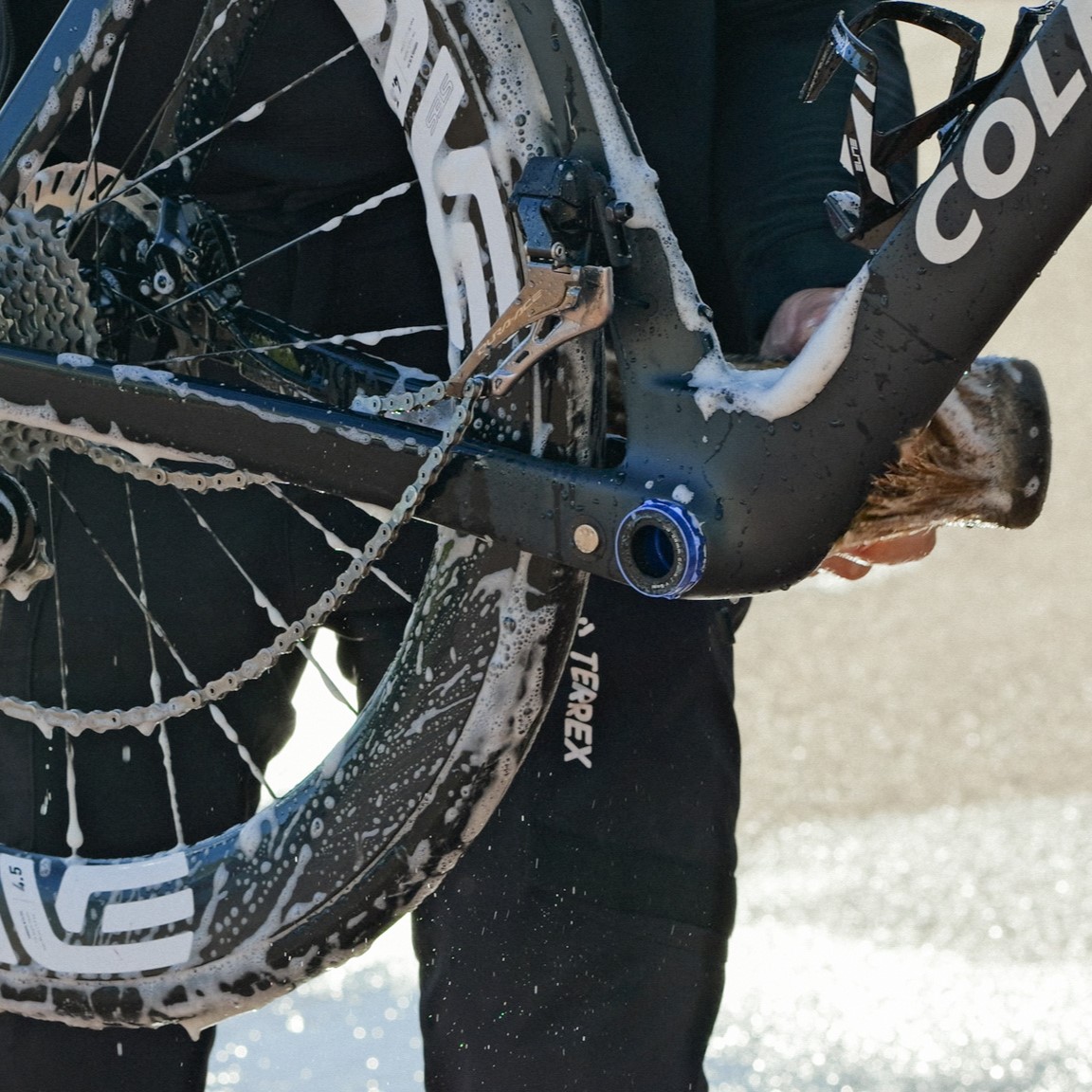
Inspection of bottom bracket condition
Regular inspections should be performed to assess the bearing’s condition. It ensures its correct functioning throughout the entire training session and prevents further damage.
Frequency
MTB or Wet Climate: Every 1500 km.
Road or Dry Climate: Every 3000 km
Inspection steps
Disengage the chain from the system, leaving the crankset and cranks free from the rest of the transmission.
Spin test: Evaluate the bearing’s movement according to the following criteria:
-
-
-
-
-
- Smooth spin without noises:
The system operates correctly without any noise or resistance. It can continue to be used without the need for any intervention. - Roughness, noises, irregularities or lockups:
The bearing needs to be replaced. Contact an authorized seller to ensure a proper replacement or do it yourself following the instructions.
- Smooth spin without noises:
-
-
-
-